Monday, September 14, 2015

unqualified love

"In sickness and in health" doesn't cover the reality of that vow. It doesn't speak to catheters and enemas and cleaning your loved one and advocating with health professionals for appropriate care and comfort and an endless stream of appointments and tests and reports. 

"For better or for worse" doesn't mention sleeping for a week in a reclining chair in the living room beside your husband's hospice-at-home hospital bed so you can hold his hand, listen for his breathing, and ease his passage from your life. 

They promised and they danced and they laughed and they loved.

Diva Moe has lost her husband after seven years of living with cancer, and in the journey to this new reality she has demonstrated what it means to love. To love as a choice and an action, not just in flowering script and happy moments. Technically he was her husband (for the second time) of 15 months, but in reality he was her husband for 28 years. 

I know there were times Moe felt unqualified for the tasks before her. She had no health care training. She had her own grief and guilt and joy and fear to navigate and the journeys of their five children and son-in-law to travel alongside. 

But unqualified has that other meaning, in this case the more appropriate meaning. Moe has loved without ceasing. She has loved without reservation or condition. She has loved through terror and exhaustion and beyond herself. Moe has modelled unqualified love to her children and her friends. She has honoured her vows in ways she couldn't have imagined even on their second wedding day when her husband was already ill and 'in sickness and in health until death parts us' was in the clouds that rained on their joy. 

I am amazed by her, and by this steadfastness of her love. I am blessed to have borne witness to it, and I am blessed to have received it myself. May we all be so unqualified in our loving. 

Saturday, August 15, 2015

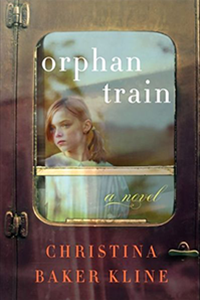
Orphan Train: a book club review

Orphan Train, by Christina Baker Kline is a book I approached with a certain excited trepidation. Having written my masters thesis on Victorian orphans, I knew the despicable pedant in me would be on the look out for historical inaccuracies, but it's also a topic I find fascinating and the blurbs sounded good. Of course, there is a world of difference between Dickens' "lone, lorn, creatures" and American children sent from East Coast cities to lives of servitude in the Midwest (the plot is slightly more Anne of Green Gables than Oliver Twist).

Orphan Train uses the classic (a.k.a. cliché) story-within-a-story structure. The framing story has troubled Goth teenager Molly meeting aged rich lady Vivian to do some community service. There are no surprises in Orphan Train - I can hardly even clarify for myself what might constitute a spoiler in this review since not a single element of the plot was a twist. Their friendship builds as Vivian tells Molly the story of her childhood as an 'Orphan Train rider' and ... the rest is glossed-over history. 

Kline's story-telling is pleasant. Her writing style is both poetic and fluid, and her characters, in general, are well-developed. I devoured the book like one does a meringue - in the moment it's great, but you aren't left with much at the end.

In fact, as I was preparing to go to book club, I had to check my book shelf to remember what book we'd read. What was missing was any sort of sensory input. Not just skirting the issue of 'bad things happening,' but the stench of a family of 6 living in a New York City tenement, the cold of an unheated Minnesota sewing room, the pain of soul-crushing loss, the ache of horny teenagers, the promise of spring. Given the time period of the inside story, Kline left a lot on the table.

It's a good book. On the 'liked/didn't like, recommend/don't recommend, three-word review' test for book club I'd say
  • liked
  • recommend
  • predictable, enjoyable, fails to impress

Dear sweet funny bad-ass Little E hosted a luscious summer patio dinner, and faced the challenge of hosting for this book head on. We have a tradition in the club of, when possible, tying the theme of the dinner to the theme of the book. For a book like The Great Gatsby or The Secret Life of Bees the theme can be both obvious and inspiring to work with. For a book about orphans sent to work on farms and in other forms of indentured servitude for people little capable of or willing to care for them, during the Great Depression, with references only to squirrel stew or weak potato soup well, the cooking becomes a little more challenging.

And so, in true Little E style, we started with vodka spiked rosemary lemonade. I don't know that there's a connection to the book, and I don't care. She should bottle that stuff! From there, the framing story of the book is set on the coast of Maine, and Little E wisely took her inspiration from there.

Clam chowder thick enough to stand a spoon in, with an extra bowl of crumbled bacon on the side if we wanted more (it's bacon - WE WANTED MORE!). Seafood tacos with sass and verve and succulence. Lobster salad. There was more. Much more. And sorbet in orange peel bowls for dessert were the perfect palette cleansing touch of sweetness.

As always, the conversation was rich and far-ranging and sometimes off topic and insightful. On a sunny July deck in a gorgeous thriving back garden, with bees (okay, wasps, but they're less poetic) buzzing and a sweet baby girl stopping by to say "goodnight Mama" to our hostess, there was plenty of proof once again why book club is my favourite night of the month.

Saturday, August 8, 2015

the mother of all reviews

In the last 9 months or so I've fallen so far off the blogging wagon that I haven't even posted book reviews. Many of the books I've read I've drafted posts about - some full of notes & thoughts at the time, and some just with the title as a place-holder in my drafts folder.

My night stand on any given night. 
I thought about powering through them all - blasting out review after review until they're done. I will still post proper reviews of all the missing book club books (because I love those ladies, it's often the highlight of my month, and those posts are generally about more than just a book review).

While considering the back log recently, I had a streamlining idea - for all of the non-book club book backlog I will apply the round-robin review that we use to ensure everyone at book club gets heard at least once (we might have a conversation dominator or two *blushes & waves*)

Before our conversation turns into a free-for-all we go around the table and say 

1. Like it/didn't like it
2. Would/wouldn't recommend it
3. Three word review 

In truth, the three-word review is rarely just three words, but it's generally brief and not an invitation to discussion so much as an impression. We're not overly disciplined about that as it's hard not to jump in with 'oh really, but' or 'I know, right?,' but we do rein ourselves in if we haven't gotten around the table yet. 

So ... here are some of the non-book club books I've been neglecting to review. I won't be linking to Amazon anymore as they are now requiring Canadian associates to provide income details for the IRS. To which I say, "OH, HELL NO!" I do hope you'll instead check your local bookseller if anything I review catches your fancy.

White Tiger, by Aravind Adiga
1. Liked it
2. Recommend it to most people
3. Compelling, charming, disturbing

Run, by Ann Patchett
1. LOVED it
2. Strongly recommend it
3. Redemptive, thought-provoking, comforting 

The Art of Non-Conformity, by Chris Guillebeau
1. Loved it
2. Recommend it to those ready for a different way to do life
3. Encouraging, inspiring, practical

The Measure of a Man, Sidney Poitier
1. Liked it
2. Recommend it
3. Deep, poignant, moving

One Hundred and Four Horses, by Mandy Retzlaff
1. That's a complicated question sometimes - I liked her writing, but I am SOOOO over 'poor me' stories of white Africa. Yes, what happened to the white farmers in Zimbabwe was inhumane and unjust. But can we at least acknowledge the 200+ years of inhumane and unjust colonization that came before? 
2. I would recommend it with caveats - and to my white African friends.
3. Engrossing, tone-deaf, poorly edited ('azure' 8 times in one chapter? C'mon)

There have been more, but without a place holder they've fallen away. More of Diana Gabaldon's Outlander and Lord John series. Books I picked up in the Cuso Jamaica office. Books I left behind in airports and on buses. But we've started clearing the backlog. Just a bunch of book club reviews to go and I might even start actually writing again.

Stranger things have happened.

Wednesday, July 22, 2015

the crabs in the bucket

Back when K'os first emerged on the western Canadian music scene in the early 2000s (I imagine he was already known in eastern Canada before then), I thought little of his song 'Crabbuckit' other than 'It's got a good tune and I can dance to it' (some of you are too young to get that reference; get offa my lawn).


It's still a catchy tune, but lately I've been more and more aware of the metaphor - it seems in a bucket full of crabs you don't need a lid because any brave crustaceans that try to rise above will be pulled back down by the other crabs, or so the story goes. 

I like crabs. They are intriguing, adaptable, tasty creatures. But you wouldn't want to be in a bucket with a bunch of them. 

Ever since I returned home from Jamaica, I've been slipping around, having trouble finding my feet. I was light and glowing when I returned - the experience, the sunshine, the healthy diet, the fabulous friends, the freedom, the opportunity to make a visible difference. It all had an effect I thought would last. 

In fact, much of the growing and learning I did in Jamaica has lasted and will last, though the glow has gone. For the last two months I've been in one of the deepest depressions I've experienced in years -  it's acute and circumstantial. It's a lack of sunshine and freedom and pineapple and clarity. This too shall pass and is already lifting. 

But in the midst of that were the crabs. Those people who wanted to downplay my experience. Those whispers of 'oh shut up about Jamaica already.' Those accusations of narcissism and self-obsession and expressions of disinterest. And the crabs in my own head asking whether I have any worth back here in Canada, whether I'll ever be able to break out of the bucket again, whether any cute crab will want to join me on the outside. 

I was talking to my friend Mr. C a week or so ago and explaining to him how the slide had started, and what had accelerated it. What we were really talking about was my lack of writing since I've come home - here, there, or anywhere. When I relayed some of those whispers, at first he was indignant on my behalf. Mr. C is a great encourager of mine - he reads and responds to my writing, and he and Mrs. C kept me good company in Jamaica via Skype and Facebook. I like to tease him, and I love that he's in my corner. 

And then he interrupted me, as he is wont to do, and said, "and how DARE you listen to that bullshit?!" 

He has a point. 

Crabs are good for eating. And watching on the beach. And taking funky pictures of. They are not good for conversating with.

You can stay in the bucket if you want, but I've got more adventures to have. And if you're not interested in them, feel free not to read what I write. 

Monday, June 29, 2015

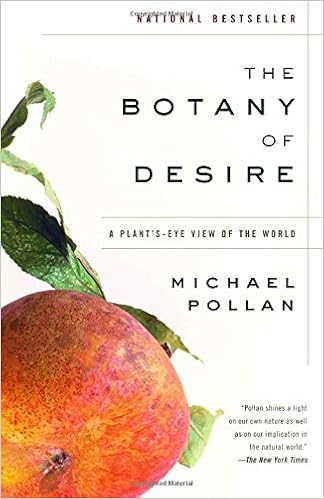
The Botany of Desire: a book club review

I thought I wrote this months ago. In fact, I remember writing key turns of phrase months ago. Maybe I wrote them on scrap pieces of paper, or on the notepad of a now dead 'smart' phone. Wherever they are, they are gone. And while my memory of writing them lingers, the actual phrases are now obscured by the dust of an unreliable brain. 

Michael Pollan, famous sibling and bally-hoed food writer, has a keen and interesting interest in the intersection of botany and culture as it shows up in our eating habits. For this exploration Pollan dedicates each of the four chapters in his book to four crucial plants in the development of western culture: the tulip, the potato, the apple and marijuana. They are an interesting lot, chosen for their appeal to riches, beauty, nourishment, and escape. 

I find Pollan's writing style engaging; his blend of science, social study and gastronomy really works for me. My only strong resistance to this book came from his rah rah Americanism in the section regarding apples. I hate jingo-ism at the best of times, and the supposed claim America has on apples strikes me as false as a starlet's buxom breasts or a Texas dame's big blonde 'do.

That said, the history of the apple in America, being grown first and foremost for cider until prohibition caused the apple lobby to invent that whole "an apple a day" thing, was interesting. I do love my cider. And it tied the apple and prohibition nicely to the intriguing chapter on marijuana, the big oil lobby that destroyed hemp as an industrial crop. and the underground growing that has resulted in marijuana plants that deliver more high in smaller plants. 

From the money-grubbing Dutch Rennaissance tulip bulb hoarders to Monsanto potato farmers, Pollan's research weaves a clear narrative of how humans have influenced plant evolution and vice versa. 

If only Johnny Appleseed wasn't so wrapped up in Old Glory.
_______________________
Something weird happened this book club - which I'm really having to stretch to remember. Some of us were going to go on our annual retreat, but that didn't happen. Some met anyway but I was protesting the lack of retreat (a.k.a. chopping off my nose to spite my face), didn't go, and don't remember hearing how it went. I guess this is still a 'book club review' even though I wasn't at the meeting. I will say that of all the lofty goals we started book club with, retreat was one of my favourites and it's disappointing that we've only managed to retreat once. With the constant stream of new babies (8 in 3.5 years) it's hard for members to get away. It's totally understandable but still disappointing.

Related Posts Plugin for WordPress, Blogger...